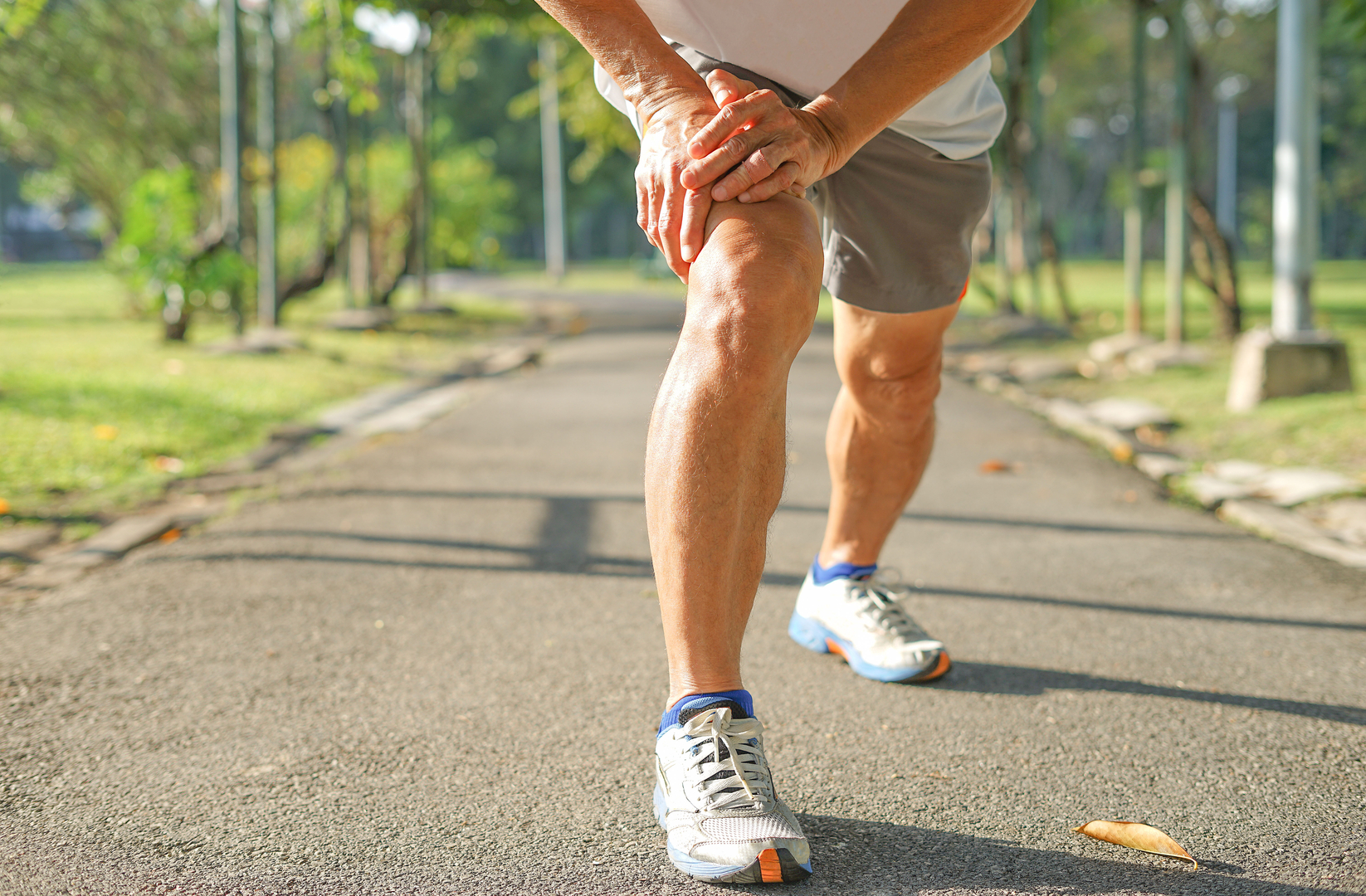

Strong thighs can, quite literally, be considered among the core “pillars” of healthy ageing, especially for the elderly. “Literally” because our thigh muscles, which consist of the quadriceps (quads) at the front of the leg above the knee and hamstrings at the back, play a huge role in keeping us balanced and stable while standing upright, seated and moving.
Strong thighs help maintain mobility and functional independence as we age. Along with the other leg muscles, our thigh muscles have a massive impact on our life expectancy and quality of life. The equation is simple: Strong thighs = better mobility and lower mortality.
As a consequence, strong thighs help keep the elderly farther away from the grave dangers posed by accidental falls, severe fractures and even accidental death. You can compare the role of our thighs to that of the foundations of a house. The stronger the foundations, the sturdier the house, even as it grows older.
Our thigh muscles are essential for daily activities such as walking, standing, climbing stairs, and lifting objects. As the primary engines of mobility, they provide the main motive power for many movements essential for mobility and balance in the elderly. Clinical data continues to prove that strong thighs confer better mobility and lower mortality.
As a guarantor of mobility, the thighs are responsible for weight-bearing, stabilizing our bodies, controlling our movements, and for proprioception (our body’s ability to sense its position and movement in space). Strong thighs also support bone health, reduce pain, and mitigate the risks associated with sarcopenia and chronic diseases prevalent among the elderly.
Several studies reveal a significant correlation between leg strength, including thigh muscle strength, and a lower risk of premature death. Weak leg strength has been identified as a predictor of higher mortality from various causes, including cardiovascular disease.
A 2021 study in The Journal of Gerontology found that lower limb strength (particularly in the thighs) is significantly associated with reduced risk of falls among elderly women. The takeaway here is that the stronger the thighs, the steadier your body.
Strong thighs, therefore, play a vital role in maintaining our health as we age. They also reduce the risk of sarcopenia (the age-related loss of skeletal muscle mass and function) and dynapenia (the age-related decline in muscle strength and power).
Of course, it’s all the muscle groups in your legs working in unison that allow you to move safely. Strong legs are vital for performing daily tasks such as walking, climbing stairs, and getting up from a chair, which maintain functional independence. Lower body muscle strength is crucial for balance and coordination, and it directly impacts the ability of seniors to move safely and confidently.
A study published in the Journal of Clinical Research and Diagnostic Research in 2019 highlighted that weakness in the lower extremities, particularly in the quadriceps, is associated with difficulties getting up from a bed or chair. This weakness also contributes to a slower gait and an increased risk of falls.
The data shows that strong and well-functioning leg muscles, including those in the thighs, calves, ankles, and hip abductors, are vital for maintaining mobility and balance in the elderly. But I argue that strong thighs seem to have an arguably more pivotal role in the process of functional independence and the overall health of seniors. Strong thighs play a crucial role in helping prevent falls and fractures caused by falls.
Thighs Are Important In Healthy Aging
For millions of older adults around the world, the most vital and often overlooked indicator of good health is strong thighs. Our thighs play a crucial role in healthy aging.
They serve as the pillars for an older adult’s ability to maintain functional independence, mobility, and an overall better quality of life.
Strong thighs also support joint health (especially in the knees) by reducing strain on ligaments and cartilage. This is quite important for persons with osteoarthritis. A 2023 study in the Caspian Journal of Internal Medicine found that quads and hamstring exercises help relieve pain and stiffness associated with lower-body osteoarthritis.
Strong thighs ensure efficient movement while preventing compensatory movements that might lead to joint pain or injury. Leg strengthening exercises help strengthen and stabilize the lower body joints, including the knees, feet, and ankles.
Stronger legs and thighs have a positive impact on our metabolic and cardiovascular health. They’re associated with improved insulin sensitivity and better glucose metabolism that can help protect against type 2 diabetes and cardiovascular disease.
Research shows that both the quads and hamstrings are key to maintaining our overall functional independence and cognitive health. Strong thighs are the cornerstone of our functional independence. Functional independence refers to our ability to perform what are called “Activities of Daily Living” (ADLs) and “Instrumental Activities of Daily Living” (IADLs) without much assistance from another person.
Maintaining functional independence is crucial for the elderly as it allows freedom of movement while improving the quality of their lives. ADLs include basic self-care tasks like dressing up, eating, and going to the bathroom. IADLs are those more complex activities such as managing finances, preparing meals and riding a jeepney or bus.
Cognitive health refers to the mental processes that enable thinking, learning, remembering and communicating effectively. As an essential part of brain function, cognitive health influences our decision-making, resilience to stress and the overall quality of our lives. Among the elderly, a healthy brain and body working together for optimal wellness empower them to live more fulfilling lives despite the perils of ageing.
It also maximizes their physical capabilities, mental acuity (the sharpness of their mental faculties such as perception and memory) and social connections. All of these work in concert to improve overall life satisfaction and purpose among the elderly.
Stay Balanced
Among our seniors, keeping balance is, quite literally, a delicate balancing act with profound consequences for their healthspan, or the period of life they spend in good health.
One small mistake, turning around too suddenly or slipping in the bathroom, for example, might result in a fall that causes severe injuries such as hip fractures, hand fractures and traumatic brain injuries (TBIs). More than 95 percent of hip fracture cases in the United States are caused by falls.
It’s clear falls are a leading cause of injury among the elderly. It’s also apparent that falls can be quite dangerous due to age-related declines in muscle mass, bone density, flexibility, and sensory and cognitive function.
All of us will become physically weaker as we age. This inevitable decline in physical strength can be caused by sarcopenia (the age-related loss of skeletal muscle mass and function) and dynapenia (the age-related loss of muscle strength and power).
The elderly also have to contend with frailty, which is a clinical syndrome marked by a decline in their physical and cognitive capabilities. Frailty also sees multiple body systems lose their ability to maintain balance or homeostasis. Falls and fractures are two of the painful consequences of frailty.
Others are chronic inflammation and multiple chronic diseases such as cardiovascular diseases affecting the heart and blood vessels (heart failure, heart attack, coronary artery disease), diabetes, arthritis and osteoporosis (a bone disease characterized by a loss of bone density that increases the risk of fractures).
Frailty, however, isn’t an inevitable part of ageing. Evidence shows frailty can be prevented, and even reversed, with early detection and adequate interventions such as regular exercise and a balanced diet. These twin interventions will help maintain balance.
Thighs And Balance
Our thighs play a pivotal role in maintaining balance and preventing fall injuries due to the strength, size, and function of their muscles. The primary thigh muscles (quads, hamstrings, inner thigh adductors, and sartorius) work together to bear most of the body’s weight. They also keep the hips and legs aligned and assist in stabilizing balance during static (standing) and dynamic (walking, running) activities.
In addition, thighs help stabilize the pelvis and knee joints. In doing so, they prevent excessive movement or misalignments that might lead to falls or instability. The quads help align the body’s center of gravity over the base of support; hamstrings stabilize the knee during bending and straightening.
Our thighs control our leg movements, including adduction or bringing the thighs together, and rotating the hips. Both these movements are essential for maintaining balance when shifting direction or standing on one leg.
Our thighs enhance proprioception, or the body’s awareness of its position in space. Proprioception is vital for balance, especially during complex movements such as dancing or sudden movements such as avoiding bumping into something.
Thighs And Mobility
Our thighs provide the power and control necessary for mobility. They’re also intrinsic to virtually all our lower-body movements. By flexing the hip and extending the knees, our thighs allow us to walk, stand up and climb stairs. On the other hand, the hamstrings flex the knees and extend the hip. These actions allow us to walk, run and squat.
Muscles like the sartorius and adductors move our legs toward and away from the body while also permitting rotation at the hip. These movements make it possible for us to cross our legs and change direction when walking or running.
Stabilizing the legs as they swing forward and backward is the job of the inner thighs (or adductors) and the outer hip muscles working in sync. The outcome is a healthy stride and lateral (side-to-side) movement.
The balanced strength in our thigh muscles helps protect our knees, hips, and ankles from injury and creates smooth and pain-free movement.
Exercises For Healthy Thighs
Gerontologists and researchers in aging continue to emphasize thigh strength as a key indicator of healthy aging and longevity. Preventing thigh muscle loss helps reduce the dangers arising from frailty, falls, fractures, as well as the inability to perform ADLs and IADLs.
Exercises that strengthen the thighs are essential since research shows the quads are more prone to age-related muscle loss compared to the muscles in the lower leg (calf) or pelvis. Since these large muscles deteriorate quickly as we age, their condition has become an early marker of overall ageing health.
A study among elderly women found that thigh muscle volume strongly predicts functional power better than grip strength or gait speed, especially in actions like sit-to-stand and leg push. Data on dynapenia and knee-extension strength (a proxy for thigh strength) correlate with a significantly lower risk of mortality.
On the whole, strength training aimed at all muscle groups reduces mortality risk by 10 to 17 percent. Additional benefits include improvement in body composition and a boost to cardiovascular health. Since the quadriceps are large, metabolically important muscles, working them contributes significantly to these benefits.
It’s safe and wise to start slowly and gradually increase the repetitions. Begin with a lower number of reps and sets, and gradually increase as your strength improves. Focus on proper form to prevent injuries and maximize the effectiveness of the exercises.
Drink plenty of water before, during, and after these exercises. It’s recommended you include a gentle warm-up before each exercise session. Examples of light warm-ups are marching in place and dynamic stretches (arm circles, leg swings, torso twists). Also, strive to cool down after the exercises by doing static stretches (quadriceps stretch, hamstring stretch).
It’s also prudent to have someone with you while you do these exercises for the sake of safety.
Also called Chair Squats, this exercise is quite popular and mimics the everyday movement of getting in and out of a chair. It primarily targets the quads and glutes (the butt), with assistance from the hamstrings and calves (the muscles below the knee).
Sit on a sturdy chair with or without armrests. Use an armrest if you need extra support.
Your feet should be flat on the floor, a hip-width apart. The goal is to stand up fully, engage your thigh muscles, and slowly sit down again.
Starting Position: Sit on a stable chair with your feet flat on the floor and knees bent at a 90-degree angle. Your back should be straight. Look straight ahead.
To stand, lean slightly forward at your hips, keeping your back straight. Push down through your heels and engage your thigh muscles to lift your body into a standing position. If possible, try to avoid using your arms for momentum. If you use the armrests for initial support, gradually reduce your reliance on the armrests.
Full Extension means standing up straight with your hips and knees fully extended. Maintain your balance as you do so.
Sitting down will see you slowly lower your body back down into the chair by bending your hips and knees. Control the movement and avoid “plopping” down onto the chair.
Repetitions: Aim for eight to 12 reps. You can do as many as comfortable while maintaining good form. You can start with fewer reps and gradually increase the number.
Safety Checklist
Wall slides are an easier exercise that strengthens the quads and glutes while minimizing the stress our knees have to endure.
In this exercise, stand with your back against a wall. Your feet should be shoulder-width apart and about a foot or two away from the wall.
Slowly slide down the wall by bending your knees. Keep your back in contact with the wall as if you’re sitting on an invisible chair. Lower yourself until your thighs are parallel to the floor, or as far as is comfortable without pain. Ensure your knees are over your ankles and don’t go past your toes.
You then push back up to the starting position. Hold the lowered position for a second or two to increase the challenge.
When pushing up, slowly straighten your legs and slide back up the wall to the starting position. This will engage your thigh muscles. Try eight to 12 reps, or as many as you are comfortable with.
Safety Checklist
This exercise engages the lower portion of the quads. It boosts overall lower leg strength and stability, both of which are crucial for balance and preventing falls.
Stand with your feet flat on the floor, shoulder-width apart. Hold onto a stable surface for balance if needed. This stable surface could be a chair, a table, or a wall. You’ll need to hold onto something since you’ll bend your knees slightly.
Slowly rise up onto the balls of your feet. Gently lift your heels off the ground. Then, slowly lower your heels back down to the floor. A slight bend in the knees throughout the movement helps engage the lower quads more effectively. You can hold the top position for a second for more benefit.
Slowly lower your heels back down to the floor. Maintain the slight bend in your knees.
Aim for 10 to 15 reps, or as many as are comfortable while maintaining good form.
Safety Checklist
Please consult your doctor or a healthcare professional before starting any new exercise program.